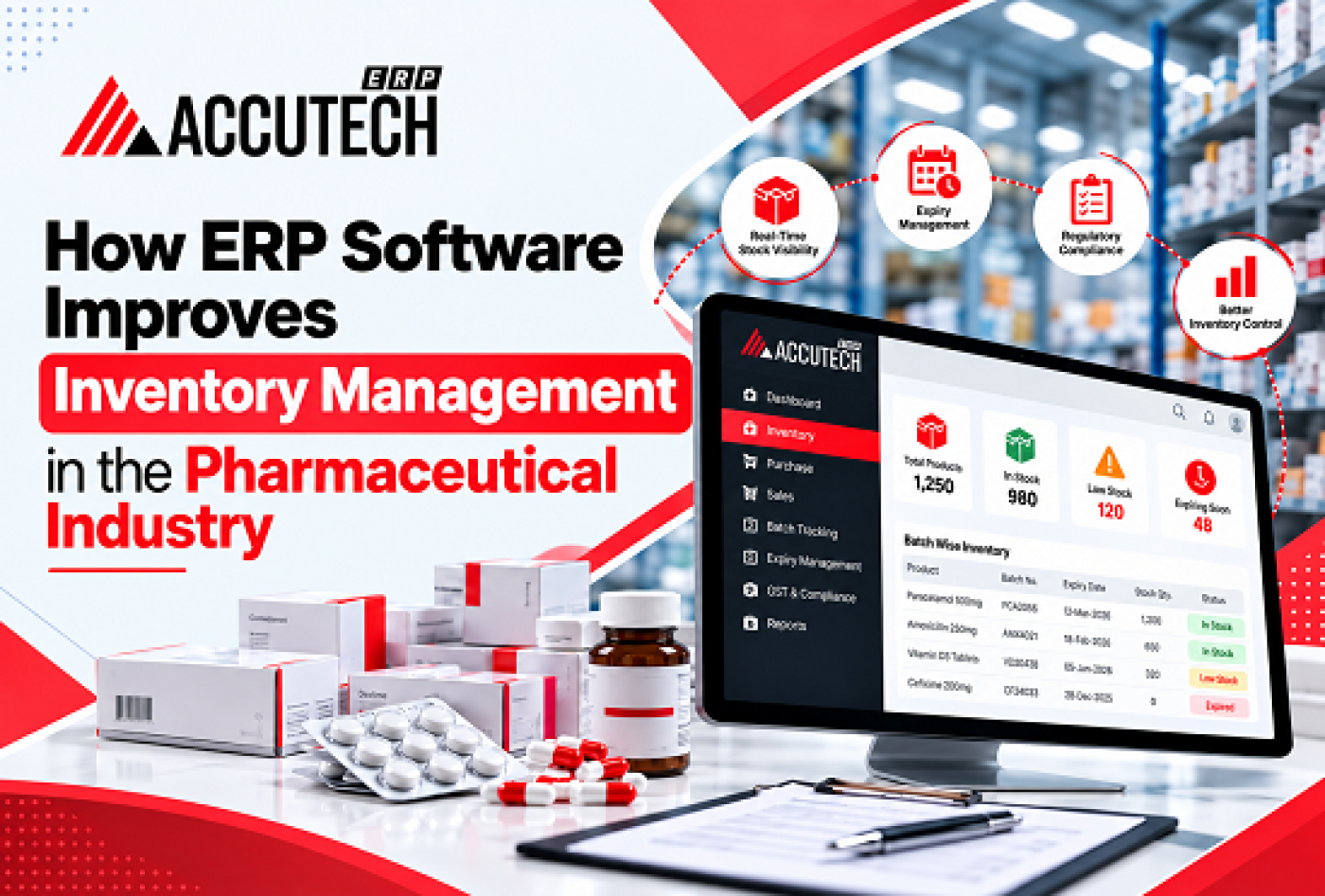
How ERP Software Improves Inventory Management in the Pharmaceutical Industry
The pharmaceutical industry operates under strict regulatory requirements, and inventory management remains one of the most critical operational challenges for distributors, manufacturers, and PCD (Propagation Chain Distribution) businesses. Traditional manual inventory systems often lead to stock discrepancies, expired drug batches, compliance failures, and lost revenue opportunities.
This is where Pharma PCD ERP Software becomes a game-changer. Modern pharma manufacturing software integrates inventory tracking, billing, GST compliance, and financial reporting into a unified platform, enabling businesses to maintain accurate stock levels while reducing operational costs. Whether you're managing multiple distributor networks or tracking drug batches across different storage locations, an ERP for the pharma manufacturing industry provides the visibility and control needed to optimize operations.
According to industry reports, pharmaceutical companies using integrated ERP systems reduce inventory costs by 15-30% while improving compliance accuracy by over 40%. This comprehensive guide explores how ERP technology transforms inventory management, improves operational efficiency, and drives sustainable business growth in the pharmaceutical sector.
Understanding Inventory Management in Pharmaceutical Distribution
What is Pharmaceutical Inventory Management?
Pharmaceutical inventory management involves tracking, controlling, and optimizing the flow of medicines, drugs, and medical products through the distribution chain. Unlike retail inventory, pharmaceutical inventory is complex because it must account for:
• Drug formulations, batch numbers, and manufacturing dates
• Expiry dates and shelf-life management
• Regulatory compliance (GST, licensing, MRP regulations)
• Temperature-controlled storage requirements
• Distributor networks and multi-location operations
• Real-time stock visibility across regions
Pharma manufacturing software specifically designed for these requirements ensures that every transaction from manufacturer to distributor to retailer is accurately documented. When businesses implement an ERP for the pharma manufacturing industry, they gain end-to-end visibility of inventory movement, reducing manual data entry errors and improving decision-making speed.
The Current State of Pharmaceutical Distribution in India
India's pharmaceutical industry is among the world's largest by volume, with PCD franchises and distributors playing a crucial role in last-mile delivery. However, many businesses still rely on:
• Spreadsheet-based inventory tracking
• Manual billing and invoice generation
• Fragmented financial records
• Delayed compliance reporting
• Inconsistent stock data across branches
This fragmentation creates inefficiencies that directly impact profitability. A robust pharmaceutical ERP system addresses these gaps by centralizing operations and automating critical processes.
Why Traditional Inventory Systems Fall Short
The Limitations of Manual and Legacy Systems
Businesses using manual inventory systems face numerous challenges that directly impact their bottom line:
Error-Prone Data Entry: Manual record-keeping leads to discrepancies between physical stock and recorded inventory. A single data entry mistake can cascade through accounts, billing, and compliance reporting, requiring hours to rectify.
No Real-Time Visibility: When using spreadsheets or disconnected systems, managers cannot access accurate inventory data in real-time. This delays decision-making and can result in stockouts or overstocking situations.
Expiry Management Issues: Pharmaceutical businesses must track batch-wise expiry dates meticulously. Without automated expiry tracking, expired drugs may accidentally be sold, leading to regulatory violations, customer harm, and business closure.
Compliance Complexity: GST regulations, MRP controls, and licensing requirements in the pharmaceutical sector demand precise record-keeping. Manual systems struggle to generate compliant reports on time.
Scalability Problems: As businesses grow and open new distributor branches, manual systems become increasingly difficult to manage. Inconsistent processes across locations create data integrity issues.
Cost Implications of Inventory Mismanagement
Industry studies reveal that pharmaceutical companies without integrated systems experience:
• 5-10% inventory shrinkage due to unaccounted stock
• 20% increase in carrying costs from poor warehouse management
• 15-25% of ordered inventory becoming obsolete or expired
• Delayed GST return filing leading to penalties
• Lost sales opportunities due to delayed distributor visibility
An ERP for the pharma manufacturing industry eliminates these inefficiencies by automating inventory operations and providing real-time data accuracy.
How Pharma PCD ERP Software Revolutionizes Stock Management
Centralized Inventory Visibility Across All Locations
Pharma PCD ERP Softwareprovides a single source of truth for inventory data across all distributor branches, warehouses, and retail points. Key benefits include:
Real-Time Stock Tracking: Every purchase, sale, and transfer is instantly reflected in the central database. Managers can access current stock levels anytime, anywhere, enabling faster decision-making.
Multi-Location Management: With an integrated pharmaceutical management system, you can manage inventory across multiple distribution centers, each with different product assortments and stock levels. The system automatically consolidates data for holistic visibility.
Batch-Level Tracking: Every batch of drugs is tracked individually with unique batch numbers, manufacturing dates, expiry dates, and storage locations. This granularity is essential for pharmaceutical compliance and customer traceability.
Distributor-Specific Inventory: If you operate a PCD franchise model, the ERP tracks inventory allocated to each distributor, their sales patterns, and outstanding balances—all in real-time.
Automated Reorder Point Management
The ERP system uses predictive algorithms to calculate optimal reorder points based on:
• Historical sales trends and seasonal demand
• Lead times from suppliers
• Distributor-specific consumption patterns
• Minimum stock thresholds for each product
The system automatically alerts managers when stock approaches the reorder point, preventing both stockouts and excess inventory. This is particularly valuable for pharma manufacturing software managing fast-moving products with tight margins.
Demand Forecasting and Planning
An ERP for the pharma manufacturing industry analyzes historical data to forecast demand accurately. Benefits include:
• Reduced inventory holding costs
• Better cash flow management
• Minimized lost sales from stockouts
• Optimized manufacturing schedules
This predictive capability is crucial for pharmaceutical businesses where production lead times and regulatory requirements make quick pivots difficult.
Key Features of Pharma Manufacturing Software for Inventory Control
Product and SKU Management
A pharmaceutical ERP solution maintains comprehensive product databases including:
• Drug formulations (tablets, capsules, injections, etc.)
• HSN/SAC codes for GST classification
• Product categories and therapeutic groups
• Manufacturer and supplier information
• MRP and wholesale pricing hierarchies
• Packing and batch size configurations
This structured data enables accurate billing, compliance reporting, and business analytics.
Stock Vouchers and Transfer Management
The software streamlines inventory movements through:
• Stock receiving and quality checks
• Internal transfer between warehouses
• Damaged goods and return processing
• Physical inventory adjustments
• Opening and closing stock statements
Every movement is documented with audit trails, ensuring complete transparency and traceability.
Warehouse Location and Bin Management
Advanced pharma manufacturing software tracks:
• Physical warehouse locations and zones
• Individual bin or rack assignments
• Temperature and storage condition logs
• Stock rotation (FIFO) enforcement
• Put-away and pick optimization
This level of detail prevents inventory shrinkage and improves warehouse operational efficiency.
Integration with Billing and Accounting
The ERP automatically syncs inventory transactions with billing and accounting:
• Sale orders create automatic inventory deductions
• Purchase invoices update stock levels
• Return transactions reverse original entries
• Cost of goods sold is calculated accurately
• Profit margins are tracked by product and customer
This integration ensures that financial records always reflect actual inventory status, eliminating reconciliation delays.
Real-Time Batch Tracking and Expiry Management
Why Batch Tracking is Critical in Pharma
Pharmaceutical products must be tracked at the batch level due to:
• Regulatory traceability requirements (MRP Act, Drugs and Cosmetics Act)
• Quality control and recall procedures
• Expiry date management and compliance
• Customer safety and liability management
• Manufacturing process documentation
An ERP for the pharma manufacturing industry maintains complete batch history from manufacturing through consumption.
Automated Expiry Alert Systems
Pharma PCD ERP Software automatically:
• Monitors expiry dates for all batches in real-time
• Generates alerts when drugs approach expiry (customizable warning periods)
• Prevents sale of expired or near-expiry products
• Generates expiry audit reports for compliance
• Suggests automatic write-offs for expired stock
This automation is critical because manual tracking often misses expired batches, leading to compliance violations and reputational damage.
Recall Management and Traceability
In case of product recalls, pharma manufacturing software enables:
• Instant identification of affected batches
• Tracking of distributed locations (which distributors, retailers received the batch)
• Customer notification workflows
• Return and refund processing
• Regulatory reporting and documentation
This end-to-end traceability is impossible with manual systems and is now mandatory for pharmaceutical businesses.
GST Compliance and Regulatory Requirements
Automated GST Compliance in Pharma ERP
Pharmaceutical businesses must file GST returns accurately and on time. Pharma PCD ERP Software automates:
• HSN classification for all drug products
• Input Tax Credit (ITC) tracking from purchase invoices
• GSTR-1 (sales) return generation with batch-level details
• GSTR-2A reconciliation and variance identification
• GSTR-3B return calculation and filing support
The system maintains detailed records for audit trails, reducing GST compliance risks.
MRP Regulation and Price Control
The software enforces MRP (Maximum Retail Price) controls:
• System prevents billing above regulated MRP
• Tracks discount permissions and GST implications
• Validates pricing against pharmaceutical pricing schedules
• Generates MRP compliance reports for regulatory bodies
This automated enforcement protects against pricing violations that can result in substantial fines.
Manufacturing and Distribution License Tracking
The ERP tracks:
• Manufacturing licenses and renewal dates
• Distribution permits for each location
• Batch-wise documentation requirements
• Regulatory approval status for products
Integrated alerts ensure licenses are renewed before expiry, preventing operational shutdowns.
Cost Reduction and Profitability Improvements
Reduced Inventory Carrying Costs
Pharma manufacturing software optimizes inventory levels, reducing:
• Warehousing space requirements
• Inventory insurance and handling costs
• Working capital tied up in excess stock
• Expiry losses from overstocking
Studies show that pharmaceutical companies reduce carrying costs by 15-25% after implementing a proper ERP for the pharma manufacturing industry.
Improved Inventory Turnover
By optimizing stock levels and improving distributor visibility, the ERP system:
• Increases inventory turnover ratios
• Reduces Days Inventory Outstanding (DIO)
• Improves cash-to-cash cycle
• Enables better volume discounts through accurate demand forecasting
Faster inventory movement means better profitability per rupee invested in stock.
Operational Efficiency and Labor Savings
Automation through pharmaceutical management software eliminates:
• Manual inventory counting and reconciliation
• Spreadsheet-based reporting and calculations
• Duplicate data entry across systems
• Paper-based documentation and filing
A typical pharmaceutical business reduces inventory management labor costs by 30-40% after system implementation.
Integration with Distributor Networks
PCD Franchise Management Through ERP
Pharma PCD ERP Software is specifically designed for PCD business models:
• Automated distributor allocation and territory management
• Distributor-wise stock visibility and pending orders
• Commission and incentive calculations based on sales
• Distributor login portals for real-time order placement
• Automated billing and invoice distribution
• Return management and credit note processing
This distributor-centric approach is what makes such ERP solutions ideal for franchise businesses.
Multi-Tier Inventory Visibility
An ERP for pharma manufacturing industry provides visibility across:
• Manufacturing plants (production inventory)
• Central distribution centers (hub inventory)
• Regional distributors (branch inventory)
• Sub-distributors and retail partners (if applicable)
This multi-tier visibility enables the company to understand supply chain bottlenecks and optimize distribution.
Distributor Order Fulfillment
Pharma manufacturing software streamlines:
• Order placement through web portals
• Availability checks against current inventory
• Automatic scheduling of deliveries
• Order-to-cash cycle tracking
• Distributor-specific loyalty programs and incentives
Real-time order management improves service levels and distributor satisfaction.
Choosing the Right ERP for Pharma Manufacturing Industry
Essential Features to Look For
When evaluating an ERP solution for pharmaceutical manufacturing, prioritize:
- Batch and expiry tracking capabilities
- Multi-location and distributor management
- Automated GST and compliance reporting
- Real-time dashboard and reporting
- Mobile app for field operations
- User role management and access controls
- Data security and backup systems
- Integration with banking for e-payments
- Audit trail and document management
- Scalability for future growth
Pharma PCD ERP Software should be industry-specific, not generic ERP adapted for pharma.
Cloud-Based vs. On-Premise Solutions
Modern pharma manufacturing software comes in two formats:
Cloud-Based ERP:
• No server maintenance burden
• Accessible from anywhere
• Automatic updates and backups
• Lower initial investment
• Better for multi-location businesses
• Ideal for growing companies
On-Premise ERP:
• Greater data control
• Customizable infrastructure
• Higher initial capital investment
• Requires IT maintenance
Most pharmaceutical businesses prefer cloud-based solutions for their flexibility and lower total cost of ownership.
Implementation Timeline and ROI
A typical pharmaceutical ERP implementation takes 2-4 months and generates ROI through:
• Reduced inventory costs (15-30% savings)
• Fewer write-offs and expired stock losses
• Faster order processing and billing
• Improved compliance and reduced penalties
• Better distributor service levels
Most businesses recover implementation costs within 12-18 months of system go-live.
Implementation Best Practices and Common Mistakes
Best Practices for Successful Implementation
- Start with Data Cleanup: Before system implementation, audit and clean existing data. Inaccurate opening balances or product master data will carry into the ERP, causing ongoing issues.
- Plan the Rollout Strategy: Implement in phases (one module at a time) rather than a big-bang approach. Start with accounts and products, then add transactions and reporting.
- Invest in Team Training: Dedicate time to train all users on the new pharmaceutical software. Poor adoption leads to people reverting to manual processes or workarounds.
- Establish Clear Process Workflows: An ERP system only works if processes are standardized. Define who approves orders, how returns are processed, etc.
- Monitor and Optimize: After go-live, continuously monitor system usage and performance. Optimize configurations based on user feedback and business needs.
Common Implementation Mistakes to Avoid
- Underestimating implementation complexity and timeline
- Attempting to migrate 10 years of historical data when 2-3 years suffices
- Poor change management and inadequate user training
- Customizing the ERP excessively instead of adapting to standard workflows
- Ignoring data security and backup procedures
- Failing to establish key performance indicators (KPIs) before implementation
Frequently Asked Questions
Q1: What is the difference between Pharma PCD ERP Software and generic ERP?
An industry-specific pharmaceutical ERP is specifically designed for pharmaceutical distribution models, with built-in compliance for GST, MRP regulations, batch tracking, and expiry management. Generic ERP systems lack these pharma-specific features and would require extensive customization, increasing costs and complexity.
Q2: How does pharma manufacturing software improve inventory accuracy?
By automating inventory transactions, preventing manual entry errors, tracking every batch with unique identifiers, and maintaining real-time stock balances. System-generated reports show variances between physical and recorded inventory, enabling quick correction.
Q3: Can an ERP system handle multiple distributor networks?
Yes, this is a core feature. Modern pharmaceutical ERP systems manage unlimited distributors, track distributor-specific inventory allocations, and provide each distributor with portal access for order placement and status tracking.
Q4: What is the cost of implementing pharmaceutical ERP software?
Cloud-based systems typically cost ₹50,000 to ₹3,00,000 annually based on user count and modules. On-premise solutions start at ₹5,00,000 plus annual maintenance. ROI is typically achieved within 12-18 months.
Q5: How long does it take to implement pharmaceutical software?
A typical implementation takes 2-4 months, including data migration, configuration, user training, and testing. The timeline depends on business complexity and data readiness.
Q6: Is cloud-based pharmaceutical ERP software secure for pharmaceutical data?
Yes, reputable cloud-based systems implement enterprise-grade security with encryption, multi-factor authentication, regular backups, disaster recovery, and compliance certifications (ISO 27001, SOC 2, GDPR where applicable).
Q7: Can pharmaceutical ERP software generate GST-compliant reports?
Yes, it automatically generates GSTR-1 (sales), GSTR-2A (purchase), and GSTR-3B (summary) returns. The system tracks HSN codes, ITC eligibility, and maintains audit trails for regulatory compliance.
Q8: How does an ERP system handle expired stock?
The system tracks expiry dates at the batch level, generates automatic alerts as expiry approaches, prevents sale of expired products, and can automatically adjust inventory for expired batches. Detailed expiry reports help identify obsolete stock early.
Q9: What training is required for pharmaceutical ERP users?
Training should cover system navigation, transactional processes (orders, invoices, returns), reporting, and compliance functions. Most vendors provide 2-3 days of on-site training plus documentation and ongoing support access.
Q10: How does pharma manufacturing software improve distributor management?
It provides distributor portals for self-service ordering, real-time inventory visibility, automated commission calculations, and performance analytics. Distributors can track their pending orders, outstanding balances, and sales reports.
Conclusion:
The pharmaceutical industry's complexity demands more than spreadsheets and manual processes. Pharma PCD ERP Software represents a fundamental shift toward data-driven, automated, and compliant operations that directly impact profitability and growth.
From real-time inventory visibility to automated batch tracking, expiry management, GST compliance, and distributor network coordination, modern ERP solutions address every operational challenge that traditional systems struggle with. Businesses that implement these systems don't just improve efficiency, they unlock new revenue opportunities through better demand forecasting, optimized distributor relationships, and reduced operational friction.
The pharmaceutical distribution landscape is increasingly competitive. Companies using pharma manufacturing software gain a sustainable competitive advantage through superior service levels, regulatory compliance, and operational efficiency. Whether you're a PCD franchise company, bulk drug trader, or pharmaceutical manufacturer, the question isn't whether to adopt an ERP it's when.
Start Your Transformation Today
If your pharmaceutical business is still managing inventory through spreadsheets or fragmented systems, the time to modernize is now. Accutech ERP offers a comprehensive pharmaceutical ERP solution designed to support the operational needs of Indian pharmaceutical businesses. Request a demo, explore its features, and evaluate how it can streamline your inventory, compliance, accounting, and distribution processes.
The pharmaceutical companies that lead their markets are those that leverage technology to make smarter, faster decisions. An ERP for the pharma manufacturing industry isn't just a cost center, it's your competitive advantage. With Accutech ERP, businesses can move toward better visibility, stronger control, and more efficient operations.
Ready to optimize your pharmaceutical inventory management? Contact Accutech ERP today and schedule a comprehensive demo tailored to your business model. A well-implemented ERP can help reduce operational inefficiencies, improve inventory control, and support long-term business growth.