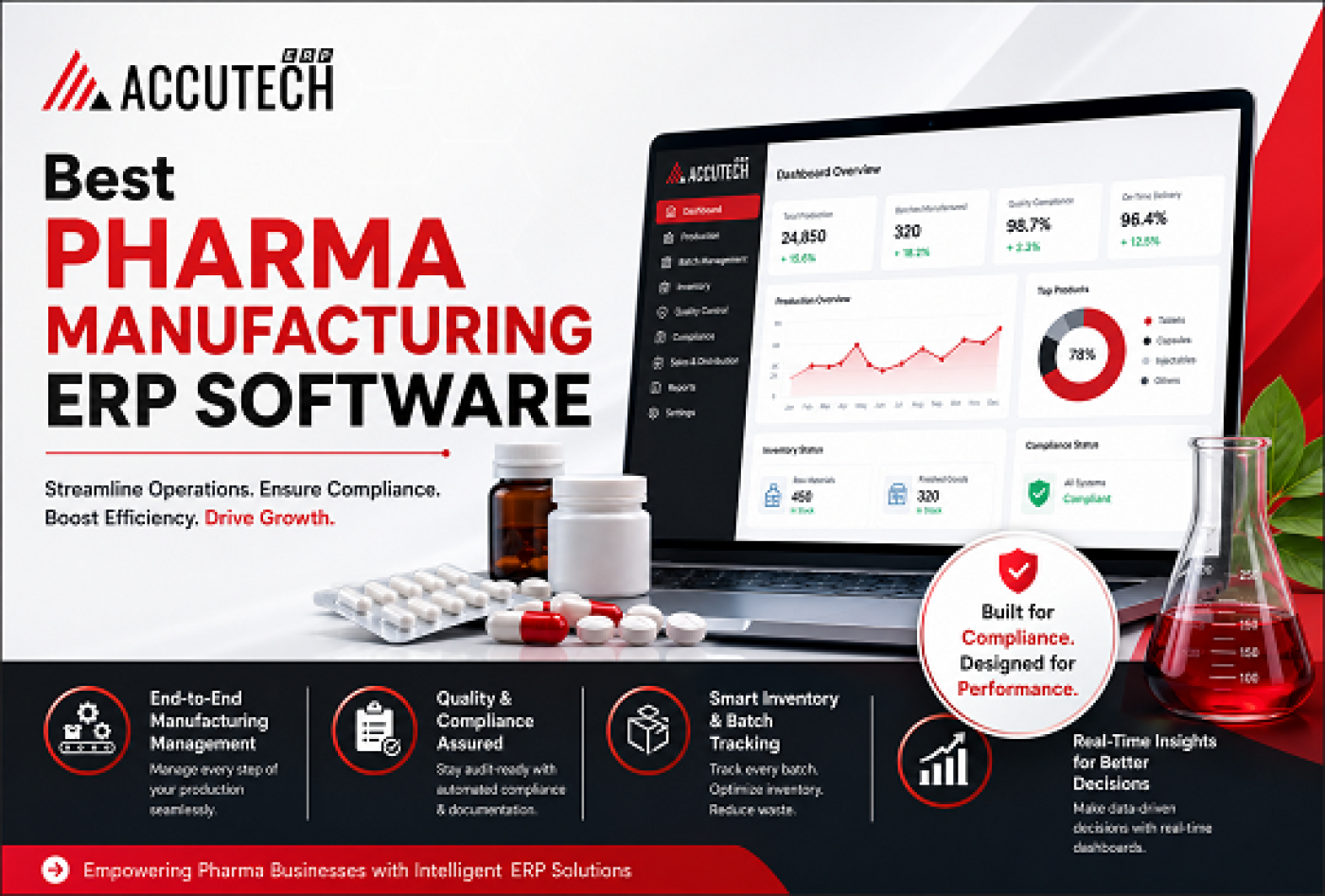
The pharmaceutical industry stands at a critical crossroads. As manufacturers globally race to meet stricter compliance requirements, manage increasingly complex supply chains, and maintain product quality while scaling operations, one truth becomes unavoidable: outdated systems simply cannot compete anymore.
Let me tell you a story. Three years ago, I spoke with the operations manager of a mid-sized pharmaceutical company in Punjab. They were manually tracking batches across spreadsheets, struggling with regulatory audits every quarter, and losing nearly 8% of their production time to administrative overhead. Sound familiar? The frustration in their voice was palpable. They were working 14-hour days, their team was overwhelmed, and worst of all one regulatory violation could have shut down their entire operation.
Today, that same company runs seamlessly on integrated pharma manufacturing software. No more sleepless nights before audits. No more frantic searches through dozens of spreadsheets. Their production teams focus on what they do best manufacturing quality medications while their back-end operations hum efficiently in the background.
This transformation isn't magic. It's what happens when you implement the right pharmaceutical manufacturing erp software. And in 2026, choosing the right solution has become more critical than ever.
What Exactly is Pharma Manufacturing ERP Software? Understanding the Basics
Before diving into solutions, let's establish what we're actually talking about. If you're new to this space, the term "pharma erp software" might sound intimidating. But at its core, it's beautifully simple.
ERP stands for Enterprise Resource Planning. In the pharmaceutical manufacturing context, it's a unified digital platform that connects every aspect of your operation from raw material procurement to finished product distribution. Think of it as the nervous system of your pharmaceutical manufacturing facility.
Imagine your manufacturing plant as a human body. Different departments production, quality control, warehousing, sales, compliance are like different organs. Without a central nervous system connecting them, these organs can't communicate effectively. One department doesn't know what another is doing. Bottlenecks occur. Inefficiencies compound. That's what happens in pharmaceutical companies operating without integrated pharma manufacturing software.
When you implement a proper solution, suddenly everything connects. When raw materials arrive, the system updates inventory. When production begins, quality parameters are automatically tracked. When a batch completes, compliance documentation generates instantly. When a customer places an order, the warehouse team knows exactly what's available. Information flows seamlessly.
This isn't just about convenience in the pharmaceutical industry, this kind of integration can literally save lives. A batch tracking error might result in the wrong formulation reaching patients. An inventory miscalculation might cause stockouts of critical medications. These aren't just business problems; they're public health concerns.
The Three Core Components of Pharma ERP Systems
- Production Management Module
This handles everything related to manufacturing operations. Batch creation, recipe management, equipment tracking, production scheduling, and work order management all live here. It ensures that every tablet, capsule, or liquid medication is produced according to exact specifications.
- Quality Assurance & Compliance Module
This is where regulatory peace of mind comes from. The system automates GMP (Good Manufacturing Practice) compliance, maintains detailed batch records, manages testing protocols, tracks deviations, and maintains audit trails that satisfy even the most demanding regulatory inspectors.
- Supply Chain & Inventory Module
Raw material procurement, inventory optimization, supplier management, and finished goods distribution all coordinated through this module. It prevents both stockouts and excess inventory, managing the delicate balance that pharmaceutical manufacturers must strike.
Why Pharmaceutical Manufacturing Absolutely Needs Integrated ERP Solutions in 2026
Let me be direct: the pharmaceutical industry in 2026 is under unprecedented pressure. Here's why modern pharmaceutical manufacturing ERP software isn't optional anymore; it's fundamental to survival.
Regulatory Complexity Has Exploded
In the last five years, we've seen an avalanche of new regulations. The FDA continues tightening standards. Global markets demand different certifications, ISO requirements, WHO prequalification, regional compliance frameworks. A pharmaceutical company operating across multiple countries now needs to maintain different compliance documentation for each jurisdiction.
Without integrated pharma manufacturing software, this becomes a nightmare. Different departments maintain different records. Audit trails are inconsistent. When a regulatory inspector arrives, you're scrambling to compile documentation from multiple sources, hoping nothing contradicts itself.
A unified ERP system maintains a single source of truth. Every action, every adjustment, every test result is logged in real-time with timestamps and responsible personnel. When regulators ask for documentation spanning twelve months and fifty batches, you can generate it in minutes.
Supply Chain Transparency Demand is Non-Negotiable
Post-pandemic, pharmaceutical supply chains are under intense scrutiny. Hospitals, governments, and patients want to know: Where did this medication come from? What ingredients were used? Who handled it during transit? Was quality maintained throughout the journey?
Customers, especially large institutional buyers now regularly demand end-to-end supply chain visibility. Without integrated pharma erp software, providing this visibility is painfully manual. With it, you can generate real-time reports showing exactly where every batch is, who's handled it, what conditions it's been stored in, and what quality certifications it carries.
This transparency becomes a competitive advantage. Companies that can prove superior supply chain management win bigger contracts.
Manufacturing Efficiency Directly Impacts Profitability
Pharmaceutical manufacturing operates on tight margins. Raw materials are expensive. Equipment is costly. Energy consumption is significant. Labor costs are substantial.
A modern pharmaceutical manufacturing erp software doesn't just track these costs, it optimizes them. The system identifies bottlenecks in production. It highlights when equipment is underutilized. It shows exactly which production processes consume the most resources. This intelligence allows you to systematically improve efficiency.
We're talking about measurable improvements: 5-15% reduction in production time, 8-12% improvement in resource utilization, 10-20% decrease in waste. In a medium-sized pharmaceutical company, these improvements translate to millions of rupees annually.
The Core Features That Make Modern Pharma Manufacturing Software Essential
When evaluating a pharma erp software solution, certain features have become non-negotiable. Let's walk through them.
Real-Time Batch Tracking and Documentation
Every batch in pharmaceutical manufacturing must have complete traceability. Who initiated it? What raw materials were used? When did production occur? What were the environmental conditions? Which quality checks were performed? Who approved it?
Modern pharma manufacturing software maintains this information automatically. As production happens, data streams into the system. Temperature sensors on storage tanks feed data directly. Lab instruments upload test results automatically. Mobile apps allow floor workers to log activities in real-time.
This means compliance documentation isn't something you scramble to compile after production ends; it's generated continuously, becoming instantly available the moment a batch completes.
Automated Compliance and Regulatory Reporting
One of the biggest pain points in pharmaceutical manufacturing is regulatory reporting. Different jurisdictions require different formats. Deadlines are tight. Non-compliance carries severe penalties.
An integrated pharma erp software can maintain compliance rules for multiple jurisdictions and automatically generate reports in the required format. When regulations change, the system updates accordingly. This removes the administrative burden and virtually eliminates non-compliance risks.
Inventory Optimization and Forecasting
Pharmaceutical manufacturing requires careful inventory management. Too much raw material ties up cash and risks degradation. Too little causes production halts and delays. Optimal inventory levels represent a crucial balance.
Modern systems use demand forecasting algorithms combined with supplier lead times and storage capacity to suggest optimal reorder points. The system knows when to buy, how much to buy, and from which suppliers. This optimization often recovers the software's cost within the first year simply through reduced carrying costs and improved supplier discounts.
Supply Chain Visibility and Supplier Integration
When your raw material supplier's shipment gets delayed, when will it affect your production schedule? Which customers might face delivery delays? Which alternative suppliers can you activate?
Integrated pharmaceuticals manufacturing software connects with supplier systems, providing real-time visibility into shipment status. It models the impact of any supply chain disruption across your entire operation. This intelligence lets you act proactively rather than reactively.
Quality Management and Testing Integration
The quality assurance process isn't separate from production, it's integral. Modern pharma erp software integrates laboratory testing, quality metrics, and production data into a unified system.
When a quality parameter exceeds tolerance, the system can automatically halt production, notify quality control personnel, and prevent a non-compliant batch from progressing. This real-time quality monitoring prevents problems rather than discovering them after the fact.
Resource Planning and Equipment Management
Pharmaceutical manufacturing relies on expensive equipment tablets presses, capsule filling machines, freeze dryers, sterilizers. Optimal scheduling ensures equipment operates efficiently without bottlenecks.
A good pharma erp software provides visibility into equipment utilization, maintenance schedules, and capacity. It can suggest production sequences that minimize changeover time. It tracks maintenance history and predicts maintenance needs before equipment fails.
How PHARMA PCD ERP Software Specifically Solves Real Pharmaceutical Manufacturing Challenges
While many solutions exist in the market, Pharma PCD has been specifically architected for the unique needs of pharmaceutical manufacturers. Let me walk you through how it addresses specific pain points.
Challenge 1: Navigating Multiple Compliance Frameworks Simultaneously
The Problem:
A pharmaceutical manufacturer might need to comply with FDA regulations for US markets, WHO guidelines for developing countries, European directives for EU markets, and national regulations in India. Each jurisdiction has different documentation requirements, reporting timelines, and inspection protocols.
How Pharma PCD Solves It:
The software maintains compliance templates for multiple jurisdictions. As you manufacture, it automatically captures data in formats that satisfy each regulatory requirement. When an FDA inspection is scheduled, you can generate documentation packages with a few clicks. The same data simultaneously satisfies WHO prequalification requirements. No duplicate data entry. No confusion about different versions of compliance records.
The system maintains audit trails that regulatory inspectors specifically look for timestamps, digital signatures, deviation tracking, root cause analysis documentation. This level of compliance readiness is what separates companies that pass inspections without drama from those that face warnings and remediation requests.
Challenge 2: Managing Complex Supply Chains with Multiple Raw Material Suppliers
The Problem:
Pharmaceutical manufacturing uses dozens, sometimes hundreds, of different raw materials. Supplier reliability varies. Pricing fluctuates. Lead times differ. One supplier might be optimal for quality but expensive, while another offers competitive pricing but requires longer lead times.
How Pharma PCD Solves It:
The system creates a complete supplier database with quality history, pricing, lead time data, and reliability metrics. When you need to procure raw materials, the system recommends optimal suppliers based on your current priorities—whether you're optimizing for cost, lead time, quality, or sustainability.
If a preferred supplier faces temporary issues, the system can instantly identify viable alternatives. It tracks supplier performance continuously, automatically alerting you if a supplier's quality or reliability metrics decline. This proactive supplier management prevents last-minute scrambling when supply disruptions occur.
Challenge 3: Maintaining Production Efficiency While Ensuring Quality Compliance
The Problem:
Faster production often seems to conflict with stricter quality control. More testing takes time. More documentation takes resources. Increasing production speed while maintaining the same quality level seems impossible.
How Pharma PCD Solves It:
This is where modern pharma erp software creates the real magic. By automating documentation and integrating quality testing with production workflows, the system eliminates the artificial conflict between speed and quality.
Automated quality monitoring happens during production, not after. Lab results feed automatically into production records. Quality deviations trigger instant responses rather than delayed problem discovery. Production teams spend their time actually manufacturing, not filling out forms. Quality personnel focus on analysis and improvement, not data compilation.
The result? Companies using Pharma PCD report 15-20% improvements in production efficiency paired with measurable quality improvements—not compromised quality, but actually better quality with faster production.
Challenge 4: Managing Batch Costs and Profitability Accurately
The Problem:
Pharmaceutical manufacturers struggle to know the true cost of each batch. Raw material costs are clear, but what about energy consumption? Equipment depreciation? Quality testing? Compliance documentation? Overhead allocation?
Understanding true batch profitability guides strategic decisions about which products to emphasize, which production processes to optimize, and where cost reduction is possible.
How Pharma PCD Solves It:
The system captures all manufacturing costs in real-time—material costs, energy consumption, labor hours, equipment usage, testing expenses. It calculates the true cost of each batch comprehensively. When you finish a batch, you know exactly how much it cost to produce and whether it's generating the margin you expected.
This visibility allows pharmaceutical businesses to identify unprofitable products, optimize production processes, and negotiate better pricing with suppliers based on accurate cost data. Over time, this cost intelligence often translates to 5-10% overall profitability improvements.
The Tangible Benefits of Implementing Pharma ERP Software: What Companies Actually Experience
Let me move away from theoretical benefits and talk about what companies implementing modern pharmaceutical manufacturing erp software actually experience.
Operational Benefits
Time Savings:
The biggest immediate benefit companies report is time saved on administrative tasks. Manual data entry disappears. Compliance documentation that used to require multiple days to compile now generates instantly. Production scheduling that involved spreadsheet juggling now happens through automated optimization.
Result: Companies report saving 200-400 hours per year in administrative work—equivalent to eliminating 1-2 full-time positions from administrative overhead while actually improving accuracy.
Reduced Errors and Waste:
Without integrated systems, transcription errors occur someone types a batch number wrong, a decimal point is misplaced, a testing parameter is recorded incorrectly. These small errors cascade into significant problems.
An integrated pharma erp software eliminates manual transcription. Data enters once at the source and flows through the system without transcription errors. Waste reduction from fewer manufacturing errors often pays for the software within 18-24 months.
Faster Problem Resolution:
When something goes wrong a batch parameter exceeds tolerance, a supplier delivery is delayed, equipment breaks down and an integrated system helps you identify and resolve the issue quickly.
Instead of discovering problems days later (or after customer complaints), the system alerts you immediately. Instead of searching through scattered records to understand what happened, you have complete context at your fingertips.
Compliance and Risk Benefits
Regulatory Confidence:
Companies operating with modern pharma erp software approach regulatory inspections with confidence rather than anxiety. Complete documentation is instantly available. Audit trails are immaculate. Quality records are consistent across departments.
This confidence isn't superficial; it's backed by reduced compliance incidents. Companies report 40-60% reductions in audit findings and compliance violations after implementing modern ERP systems.
Supply Chain Safety:
Traceability that used to take hours to compile now appears instantly. If a potential safety issue emerges with a raw material supplier, you can instantly identify which batches used materials from that supplier. This rapid response capability is invaluable.
Liability Reduction:
Complete documentation of manufacturing processes, quality checks, and compliance adherence provides legal protection. If questions ever arise about product safety or manufacturing standards, you have indisputable records showing exactly what happened and why.
Strategic and Financial Benefits
Better Pricing Capability:
With true cost visibility, you can price products more accurately. You avoid selling products at losses you didn't realize you were incurring. You can identify where you have pricing power and where you need to improve efficiency.
Improved Supplier Negotiations:
With data on supplier performance, reliability, and pricing history, you negotiate from a position of strength. You can make decisions based on facts rather than hunches.
Scalability:
Many pharmaceutical companies want to grow but hesitate because they're not sure their current systems can handle increased volume. Modern pharma erp software scales seamlessly. You can double or triple production volume without proportionally increasing administrative overhead.
Companies report the ability to increase production volume by 50-100% while actually reducing administrative headcount a remarkable efficiency gain.
Pharma ERP Solutions Comparison: How Pharma PCD Stacks Up Against Alternatives
The pharmaceutical ERP market offers numerous options—from generic enterprise solutions adapted for pharma to industry-specific platforms. Let's compare honestly.
Generic Enterprise ERP Systems (SAP, Oracle, Microsoft Dynamics)
Strengths:
- Massive global support communities
- Integration capabilities with virtually any system
- Proven at very large scales
- Comprehensive modules beyond just manufacturing
Weaknesses:
- Designed for general manufacturing, not pharma specifics
- Significant customization required for pharma compliance
- Implementation typically takes 18-36 months
- Costs often start at 500,000+ for implementation alone
- Steep learning curve—requires extensive training
Best For:
Large multinational pharmaceutical companies with deep IT budgets and time horizons for long implementations
Specialized Pharma ERP Solutions
This is where Pharma PCD competes. These are systems built specifically for pharmaceutical manufacturing, with compliance built in from the ground up.
Pharma PCD Specifically:
Strengths:
- Purpose-built for pharmaceutical manufacturing compliance
- Faster implementation (3-6 months typically)
- More affordable than enterprise solutions (100,000-250,000 typical range)
- Team understands pharma workflow without requiring extensive customization
- Batch tracking and compliance features built into core system
- Supports multiple regulatory frameworks out of the box
- Better suited to mid-size pharmaceutical companies
Flexibility:
- Works across different manufacturing scales
- Adapts to various dosage forms (tablets, capsules, liquids, injectables)
- Handles both generic and branded pharmaceutical manufacturing
The Practical Reality: Implementing Pharma ERP Software Successfully
Understanding what pharmaceutical manufacturing erp software can do is one thing. Implementing it successfully is another. Here's what successful implementations actually look like.
The Pre-Implementation Phase: Getting Ready
Honest Assessment:
Before selecting software, conduct a realistic assessment of your current operations. What processes work well? Where are the painful bottlenecks? What compliance challenges exist? What compliance challenges keep you up at night? This assessment guides software selection and implementation strategy.
Team Involvement:
Implementation success depends on buy-in from people across your organization—production managers, quality personnel, warehouse staff, finance team, compliance specialists. When everyone understands why the change is happening, they're far more invested in making it work.
Data Preparation:
Good implementations are built on clean data. Before migrating to new pharma erp software, audit your existing data. Fix inconsistencies. Eliminate duplicates. Organize supplier information. This groundwork typically takes 2-3 months but saves months of frustration during implementation.
The Implementation Phase: Step-by-Step Process
Phase 1: Configuration (Weeks 1-4)
The implementation team configures the system for your specific compliance requirements, manufacturing processes, and organizational structure. You define batch recipes, quality parameters, supplier information, and compliance settings.
Phase 2: Pilot Testing (Weeks 5-10)
Rather than switching your entire operation to the new system immediately, pilot it with one production line or one product family. This allows your team to learn without disrupting your entire operation. Problems discovered in the pilot are fixed before full rollout.
Phase 3: Team Training (Weeks 8-12)
Parallel with pilot testing, train your team. Production supervisors learn batch management. Quality personnel learn testing workflows. Administrative staff learn reporting. Finance learns cost accounting. This training investment pays dividends—trained users adopt systems quickly; untrained users resist and struggle.
Phase 4: Full Deployment (Weeks 12-16)
Once the pilot succeeds and team training completes, you deploy the system across your entire operation. Parallel running continuing your old system alongside the new one for a few weeks provides insurance against problems.
Phase 5: Optimization (Months 4-6)
After full deployment, your team fine-tunes the system based on real-world usage. This is when you often discover optimizations that weren't apparent during planning—better production scheduling approaches, more efficient compliance workflows, additional automation opportunities.
Making the Financial Case: Investment and Returns from Pharma ERP Software
Let me provide a realistic financial perspective.
Typical Investment for a Mid-Sized Pharmaceutical Company
- Software Licenses: 30,000-60,000 annually (varies by facility count and user count)
- Implementation Services: 80,000-150,000 (3-6 months of implementation team time)
- Data Migration: 10,000-25,000 (data cleanup and migration)
- Training and Enablement: 15,000-30,000 (comprehensive training for all user groups)
- Contingency (15-20%): 20,000-40,000
Total Year One Investment: 155,000-305,000 for a typical mid-sized facility
Realistic Returns
Labor Efficiency: 100,000-150,000 annually
- Reduced administrative work (6-12 FTE eliminated or redeployed)
- Faster compliance documentation (saves 200-400 hours/year
Error and Waste Reduction: 80,000-150,000 annually
- Fewer manufacturing errors (reduced scrap waste)
- Better quality yields
Supply Chain Optimization: 40,000-80,000 annually
- Better supplier pricing from improved data
- Reduced inventory carrying costs
- Fewer rush orders from better forecasting
Production Efficiency: 50,000-200,000 annually
- Better equipment utilization
- Optimized batch scheduling
- Reduced changeover time
- Faster batch release from automated quality workflows
Compliance Value:
Difficult to quantify but significant: Avoided regulatory penalties (0-5,000,000 risk reduction), Faster audit completion, Reduced inspection findings
Total Year One Returns: 270,000-580,000 (and growing in year two as system optimization matures)
Return on Investment: 75-300% in year one, with positive ROI sustained annually in subsequent years
This is conservative analysis. Many companies report significantly better returns, particularly if they had substantial inefficiencies before implementation.
Myths vs. Reality:
As a consultant working with pharmaceutical manufacturers for over a decade, I've encountered persistent misconceptions about pharma erp software. Let me address them directly.
Myth 1: ERP Software is Only for Large Corporations
Reality:
Modern pharma erp software scales efficiently from companies with 50 employees to those with 5,000. Solutions like Pharma PCD are specifically priced and configured for mid-market pharmaceutical manufacturers. Small companies often see the best ROI because automation eliminates proportionally more manual work.
Myth 2: Implementation Takes Years and Costs Millions
Reality:
Specialized pharmaceutical manufacturing erp software implementations typically take 3-6 months and cost 100,000-300,000 including software licenses and implementation services. Compare this to generic enterprise ERP implementations taking 18-36 months and costing 1-5 million+.
The faster, more affordable timeline makes sense because specialized software doesn't require extensive customization to address pharma-specific needs.
Myth 3: You Have to Replace All Your Current Systems
Reality:
Modern pharma erp software integrates with existing systems. If you have specific tools for laboratory testing, equipment monitoring, or accounting that you value, the ERP typically connects with them. You replace systems that are genuinely problematic; you integrate with systems that work well.
Myth 4: Your Existing Data is Too Messy to Migrate
Reality:
No data is so messy that migration is impossible. Yes, data cleanup is necessary. Yes, it requires effort. But pharmaceutical companies maintain far better data than many industries. With professional data migration planning, your historical data migrates successfully while cleanup happens alongside implementation.
Myth 5: Your Team will Resist the New System
Reality:
Resistance typically comes not from the new system itself, but from poor change management. When teams understand why the change is happening, when they're trained properly, and when they see immediate benefits in their daily work, adoption is surprisingly smooth.
Most pharmaceutical professionals want tools that reduce tedious manual work and help them do their jobs better. Good pharma erp software delivers this.
Frequently Asked Questions
Based on questions pharmaceutical manufacturers ask most frequently in 2026, here are honest answers.
Q1: How long does it actually take to see ROI from implementing pharma ERP software?
Most companies see positive ROI within 12-18 months. Savings come from reduced administrative labor (often saving 50,000-100,000 annually), lower error rates and waste reduction (often 100,000+), better supplier pricing from improved data (often 30,000-50,000), and improved production efficiency (often 50,000-200,000 depending on current inefficiencies).
Total annual savings often reach 200,000-400,000 for mid-sized companies, which exceeds the annual software and support costs within year one.
Q2: Will I need to hire IT specialists to manage the software?
Modern pharma erp software is designed for business users, not just IT specialists. Typical pharmaceutical companies need one person to oversee system administration and updates, but this person doesn't need deep IT expertise—they need pharmaceutical knowledge and operational understanding.
Most implementation partners provide extensive support during implementation and transition to reduced support as your team becomes proficient.
Q3: Can the software handle multiple manufacturing facilities?
Yes, specialized pharma erp software easily handles multi-facility operations. You can maintain separate production records for each facility while having consolidated visibility into enterprise-wide operations. This is particularly valuable for companies with manufacturing in multiple locations.
Q4: What happens if I need to export data for regulatory inspections?
This is where specialized pharma erp software excels. Most systems include pre-built compliance report templates. When regulators request specific documentation, you generate it instantly. The software formats data exactly as regulators expect, with proper signatures, timestamps, and audit trails.
Q5: Can the software integrate with our existing laboratory equipment and testing instruments?
Most modern pharma erp software connects with laboratory instruments through APIs and data importers. Test results feed automatically from instruments into production records. This eliminates manual testing result entry and ensures accuracy.
Q6: How does the software handle batch traceability requirements?
This is core functionality of any pharma erp software. Each batch is assigned a unique identifier at creation. As production progresses, every action every ingredient added, every test performed, every equipment used is logged against that batch. At any point, you can trace exactly what happened with any batch.
This traceability extends beyond your facility. You can trace raw materials backward to suppliers and finished products forward to end customers.
Conclusion:
We've covered tremendous ground. Let me summarize the essential takeaway.
Pharmaceutical manufacturing has fundamentally changed. Regulatory requirements have increased. Supply chains have become more complex. Customer demands for traceability and sustainability have risen. Competitive pressure has intensified. The cost of non-compliance has increased dramatically.
In this environment, operating with manual processes, spreadsheets, and disconnected systems is no longer competitive. It's actually dangerous creating compliance risks, operational inefficiencies, and financial exposure that directly threaten your business.
Modern pharmaceutical manufacturing erp software isn't a luxury for large corporations. It's foundational infrastructure for any pharmaceutical company wanting to compete successfully in 2026.
The good news? Implementation is faster, more affordable, and more achievable than ever before. Specialized solutions like Pharma PCD have been specifically designed for pharmaceutical manufacturers, meaning implementations can complete in months rather than years, and costs remain reasonable for mid-market companies.
The companies thriving in pharmaceutical manufacturing today aren't necessarily the largest or oldest. They're the ones who've embraced modern operational technology. They're systematic about compliance. They're data-driven in decision-making. They're focused on continuous improvement.
That operational maturity doesn't happen by accident. It's built on solid pharma manufacturing software foundations.
If your current processes leave you exhausted during compliance season, if production scheduling requires spreadsheet gymnastics, if tracing a batch for quality issues takes hours, if you're unsure about your true production costs these are signals that modern pharma erp software could transform your operations.
The question isn't whether to invest in modern pharmaceutical manufacturing erp software. The question is how quickly you can implement it. Because in pharmaceutical manufacturing in 2026, competitive advantage goes to the operationally mature.