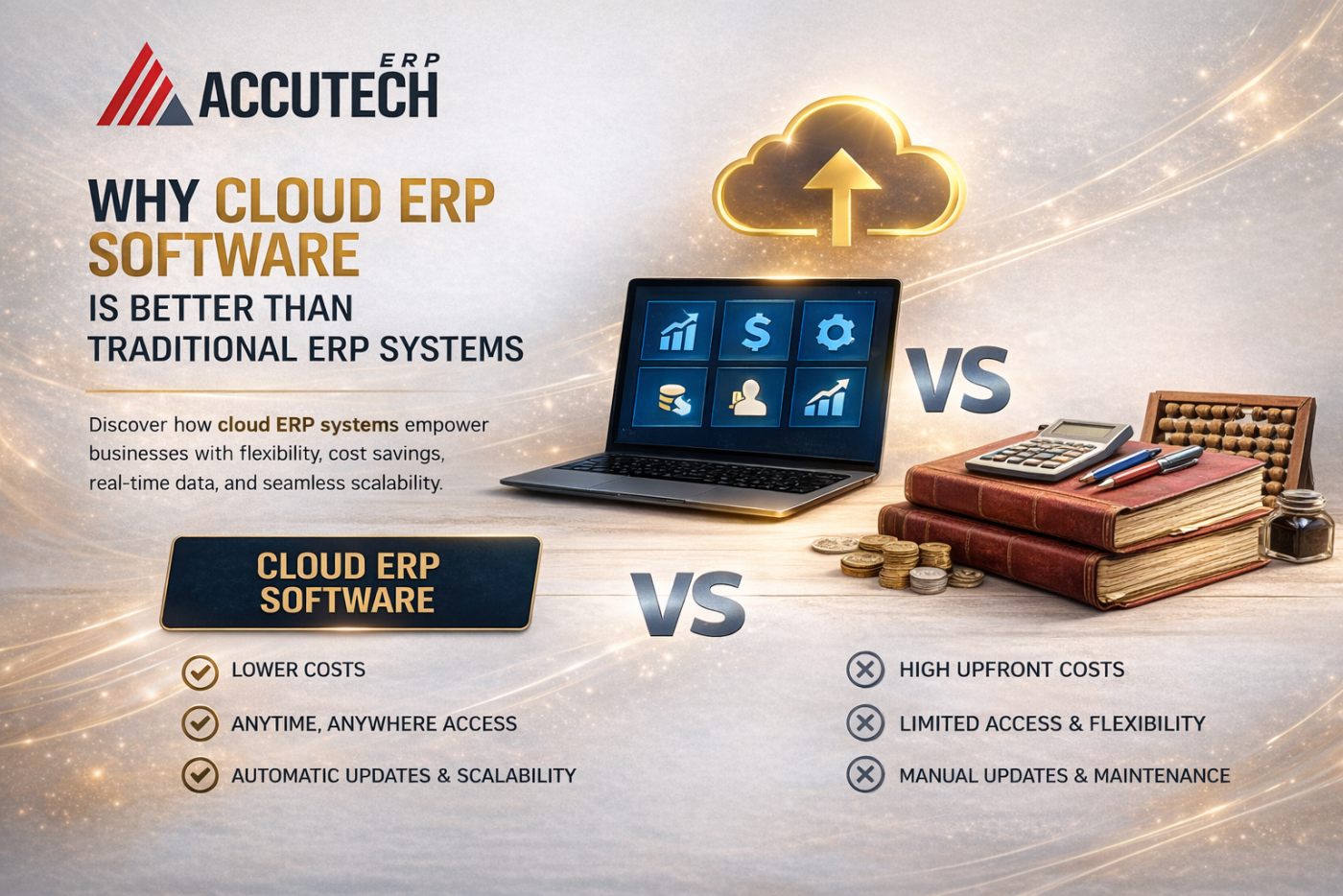
Why Cloud ERP Software is Better Than Traditional ERP Systems
In today’s fast-paced digital business world, businesses are constantly looking for better, faster, and more efficient ways to manage their operations. Enterprise Resource Planning (ERP) solutions have long been at the center of business management, helping companies streamline their processes.
With the rise of cloud-based technology, businesses have experienced a major shift in how they manage operations. Today, cloud ERP solutions are becoming the preferred choice for businesses that want to stay competitive and grow efficiently.
In this blog, we will discuss why cloud ERP software is better than traditional ERP systems and how it contributes to business growth.
What is Cloud ERP Software?
Cloud ERP is an enterprise resource planning system that is hosted on the cloud and accessed over the internet. Unlike traditional ERP systems, cloud ERP is maintained by the service provider and can be accessed from anywhere at any time.
Businesses do not need to maintain physical hardware or infrastructure. Instead, they can simply log in through a web browser and use the system online.
What are Traditional ERP Systems?
Traditional ERP systems are usually installed on a company’s own servers and infrastructure, which is why they are also known as on-premise ERP systems.
Although traditional ERP systems have been used for many years, they are often less flexible and lack the scalability required by modern businesses.
Key Differences Between Cloud ERP Software and Traditional ERP Systems
Before understanding the benefits, let’s look at the fundamental differences:
- Deployment: Cloud ERP software is hosted online, while traditional ERP systems are installed on local servers.
- Cost Structure: Cloud ERP works on a subscription model, whereas traditional ERP requires a large upfront investment.
- Accessibility: Cloud ERP can be accessed from anywhere, while traditional ERP is usually limited to office networks.
- Maintenance: Cloud ERP providers handle updates and maintenance, whereas traditional ERP depends on internal IT teams.
- Scalability: Cloud ERP scales easily, while traditional ERP often requires costly hardware upgrades.
Top Reasons Why Cloud ERP Software is Better
1. Lower Upfront Costs
One of the biggest advantages of cloud ERP software is cost savings. Traditional ERP systems usually require:
- Hardware purchases
- Software licenses
- Installation costs
- IT staff salaries
In contrast, cloud ERP systems follow a subscription-based model, which reduces large capital expenses. Businesses can start small and scale as needed.
2. Easy Accessibility Anytime, Anywhere
Cloud ERP software allows users to access business data from any device with an internet connection. This is highly beneficial for:
- Remote teams
- Multi-location businesses
- Field employees
Traditional ERP systems usually restrict access to office networks, reducing flexibility and productivity.
3. Scalability for Growing Businesses
As businesses grow, their ERP requirements also increase. Cloud ERP systems allow companies to:
- Add users easily
- Upgrade features instantly
- Scale storage without hardware changes
Traditional ERP systems often require expensive upgrades and downtime for expansion.
4. Faster Implementation
Traditional ERP implementation can take several months or even years. Cloud ERP software can usually be deployed much faster.
Because there is no need for hardware setup or complex installation, businesses can go live quickly and start seeing results sooner.
5. Automatic Updates and Maintenance
Cloud ERP providers take care of:
- Software updates
- Security patches
- System maintenance
This ensures the system remains updated with the latest features and compliance requirements. In traditional ERP, updates are manual, time-consuming, and often expensive.
6. Enhanced Data Security
Many businesses believe on-premise systems are more secure, but that is not always true. Cloud ERP systems often provide:
- Data encryption
- Regular backups
- Advanced security protocols
- Disaster recovery solutions
Leading cloud providers invest heavily in security, often more than individual businesses can manage on their own.
7. Real-Time Data and Insights
Cloud ERP software provides real-time data access, allowing faster and better decision-making. Business leaders can:
- Track sales instantly
- Monitor inventory in real time
- Analyze financial performance
- Generate reports quickly
Traditional ERP systems may rely on delayed data updates, which can reduce efficiency.
8. Improved Collaboration
Cloud ERP systems make collaboration easier across departments and locations. Employees can:
- Share data instantly
- Work on the same platform
- Communicate more efficiently
This improves productivity and reduces errors caused by disconnected systems and data silos.
9. Integration with Modern Tools
Cloud ERP software integrates easily with:
- CRM systems
- E-commerce platforms
- Payment gateways
- Analytics tools
Traditional ERP systems often face compatibility issues and may require extra development for such integrations.
10. Better Business Continuity
Cloud ERP systems help businesses continue operating even during disruptions. Since data is stored in the cloud:
- It remains accessible during office shutdowns
- It stays safe during hardware failures
- It supports remote work effectively
Traditional ERP systems are generally more vulnerable to physical damage and downtime.
Why Businesses are Switching to Cloud ERP Systems
The demand for cloud ERP software is growing rapidly because of its efficiency and flexibility. Businesses across industries such as manufacturing, retail, FMCG, pharma, and services are moving to cloud-based systems.
Some common reasons include:
- Need for remote accessibility
- Cost optimization
- Faster decision-making
- Better customer experience
- Digital transformation initiatives
Platforms like Accutech ERP are helping businesses modernize their operations with advanced cloud-based solutions.
Is Cloud ERP Software Right for Your Business?
Cloud ERP software is ideal for:
- Small and medium businesses (SMEs)
- Growing startups
- Multi-location enterprises
- Companies seeking digital transformation
However, businesses with strict data control requirements or limited internet access should evaluate their needs carefully before making a decision.
Future of ERP: Cloud is the Standard
The future clearly belongs to cloud ERP systems. As technologies like AI, machine learning, and automation continue to evolve, cloud ERP software will become even more powerful.
Businesses that adopt cloud ERP today position themselves for long-term success and scalability.
Conclusion
Cloud ERP software has transformed the way businesses manage operations. Compared to traditional ERP systems, it offers greater flexibility, lower costs, faster implementation, and improved accessibility.
By adopting cloud ERP systems, businesses can streamline processes, improve productivity, and make smarter real-time decisions.
If your business is still relying on traditional ERP systems, now is the right time to consider upgrading to a modern cloud-based solution like Accutech ERP.
FAQs
1. What is the main difference between cloud ERP software and traditional ERP systems?
Cloud ERP software is hosted online and accessed via the internet, while traditional ERP systems are installed on local servers.
2. Is cloud ERP software secure?
Yes, cloud ERP systems use advanced security measures such as encryption, backups, and secure access controls.
3. Can small businesses use cloud ERP systems?
Yes, cloud ERP software is highly suitable for small businesses because of its affordability and scalability.
4. Does cloud ERP require internet access?
Yes, cloud ERP systems require an internet connection for access and operation.